InsightsThe Future of Place
Jackson Hole Is Both a Blueprint and a Warning
What Jackson Hole reveals about preservation, hospitality, workforce housing and the long-term value of place.
By Lauren Oakes
8 min read
Hospitality spends a lot of time trying to figure out what the guest wants next.
More wellness. Better food and beverage. Better design. More immersive experiences.
But places like Jackson Hole are showing us something much simpler.
People want to feel something.
They want beauty. They want connection. They want places that actually have an identity. They want to feel like they are somewhere, not like they walked into a beautiful hotel that could have been dropped into ten different markets.
And I think nostalgia plays a bigger role than we give it credit for.
People crave a slower pace. History. Nature. Ritual. Community. A sense that something existed before they arrived and will hopefully still exist after they leave.
Jackson Hole has all of that.
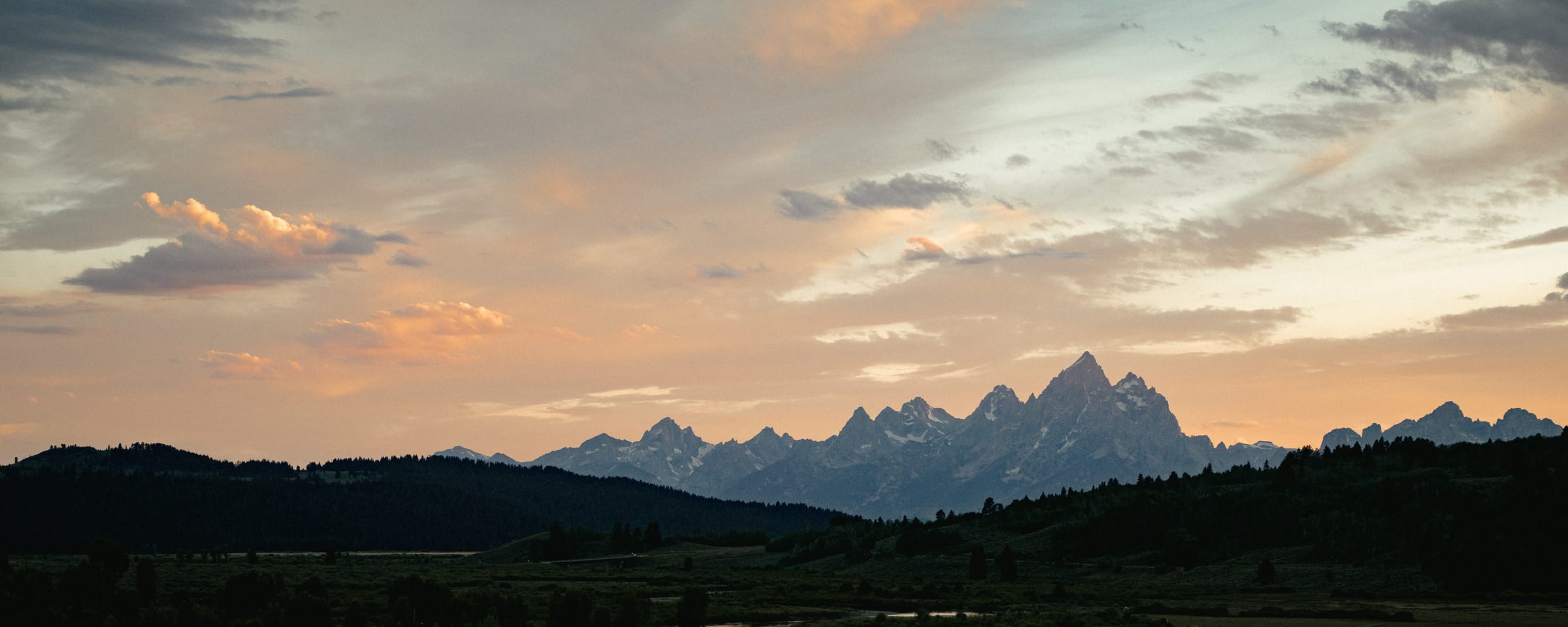
Yes, it has the Tetons, skiing, wildlife, ranch culture and Western history.
But the real value of Jackson Hole is bigger than the Western aesthetic.
It still feels like a place.
And that is where I think the hospitality industry should be paying attention.
Because Jackson Hole is both a blueprint and a warning.
Scarcity Is Part of the Value
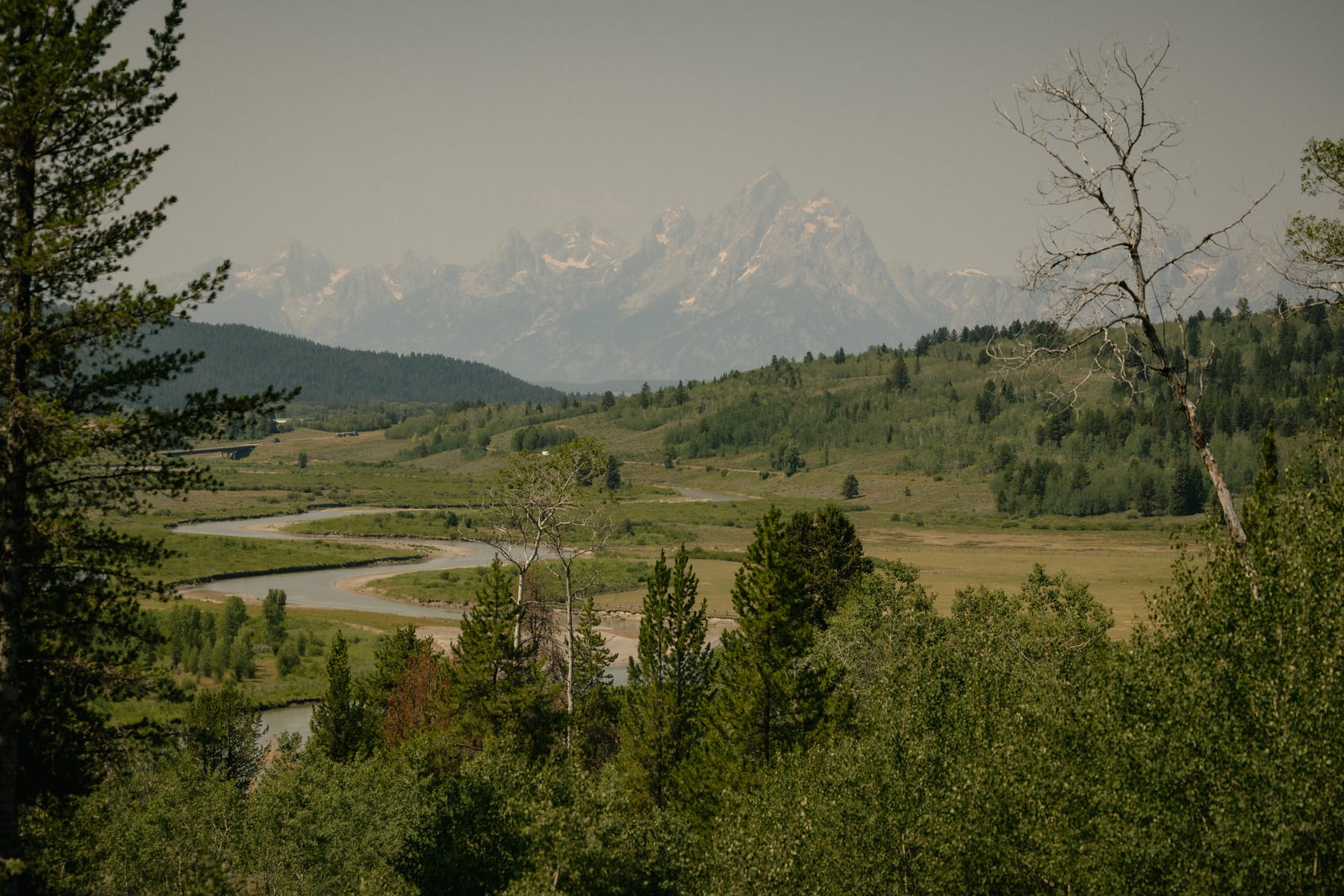
Roughly 97 percent of Teton County is publicly owned, most of it federal land, leaving only a small portion of the county in private ownership.
That obviously creates a very real real estate constraint.
But from a brand perspective, it also protects the thing people are coming for.
The mountains are still mountains. Open land is still visible. The landscape has not been completely consumed by the demand it created.
That matters.
You can build a beautiful Western hotel almost anywhere.
You can add reclaimed wood, leather, stone, cowboy photography and all the design cues people now associate with Western luxury.
You cannot manufacture the Tetons behind it.
That is why I think we need to stop treating preservation and commercial value like they are always on opposite sides of the table.
In some destinations, preservation is part of the commercial value.
So the real question is not simply whether we should develop or preserve.
It is:
How do we create economic value from a place without consuming the thing that made it valuable in the first place?
Jackson Hole Is Not Really a Population Growth Story
This was one of the most interesting parts of the research for me.
Teton County had about 23,331 residents in 2020 and an estimated 23,333 in 2025.
Basically flat.
Grand Teton National Park visitation has also remained within a relatively narrow range in recent years, aside from the pandemic-era swings.
Yet the economics of the valley have changed dramatically.
So this is not really a story about huge population growth.
It is more of a conversion story.
Housing became more valuable as an asset. Seasonal and second-home use became more attractive. Investment income became a much larger part of the local economy. Workers increasingly had to seek housing outside the immediate market.
The number of people did not have to change much for access to the place to become dramatically more expensive.
I think that distinction matters because we tend to look at destination problems and assume the answer is more supply.
More housing. More rooms. More development.
But what if the issue is not just how many people are there?
What if it is who can still afford to participate in the place?
When Housing Becomes Part of Hotel Operations
This is where the issue starts becoming very real for hospitality.
Luxury still requires people.
Someone has to clean the room.
Someone has to maintain the property.
Someone has to prepare dinner, serve the guest, move the luggage, respond when something goes wrong and create the moments that make a luxury stay actually feel worth the rate.
But many of the people delivering that experience cannot afford to live in Jackson Hole.
About 13 percent of Teton County’s workforce lives in Teton County, Idaho, on the other side of Teton Pass, representing thousands of workers who depend on that corridor.
Then part of Teton Pass collapsed in 2024.
And suddenly the system became visible.
Part of the workforce supporting one of the most valuable destination markets in the country was depending on a mountain pass every single day.
That is not just a housing issue.
That is an operating issue.
Jackson Hole Mountain Resort had already started reaching that conclusion. Its human resources leadership has said the resort once faced staffing vacancies of roughly 15 percent before housing became a larger priority and has described housing as an essential operating input, not simply an employee perk.
Grand Teton National Park faces a similar reality. Its superintendent has estimated that the vast majority of park employees could not afford to remain in the community without park-provided housing.
Those are not small signals.
They tell us that in certain destination markets, workforce housing is no longer separate from hospitality strategy.
It is part of the infrastructure.
Building More Is Not Automatically the Answer
The obvious argument is that if so much land is protected, of course housing is going to be expensive.
That is true.
But removing the constraints would also miss what makes Jackson Hole valuable.
The protected landscape is part of the reason people want to be there.
If we solve scarcity by removing everything that created the scarcity, we may eventually damage the product itself.
So I think we need a different way of thinking about development.
Instead of only asking how many rooms or residences a market can support, we should be asking how the whole place functions.
Where will employees live?
How far will they commute?
What happens when the commute breaks down?
How much workforce housing should be considered from day one?
What should never be developed?
What parts of the culture are valuable because they have not been standardized yet?
The 2024 Teton Pass closure even pushed employers and local leaders to reconsider some restrictions around employee housing and occupancy.
That matters too.
Sometimes regulations created for one version of a community no longer fit the realities of the one that exists today.
Those conversations should happen before a project is designed, not after the hotel is open and someone realizes they cannot staff it.
Where AI Can Help, and Where It Cannot
Labor-constrained markets are also where I think artificial intelligence becomes more interesting.
Not because AI can replace hospitality workers.
It cannot.
But it can absorb some of the work around them.
Scheduling. Forecasting. Internal knowledge. Repetitive guest communication. Inventory. Training support. Back-office tasks.
If people are already difficult to recruit and retain, there is value in making sure their time is not being wasted on work technology can reasonably handle.
But there is a line.
AI cannot clean a room.
It cannot fix a pipe.
It cannot physically serve dinner.
And it cannot replace warmth, local knowledge, judgment or emotional intelligence.
That is the actual product in hospitality.
Used badly, AI could make hotels more efficient while also making them feel less human.
That is not the goal.
The goal should be to remove friction around people so the people you do have can spend more time doing the things only humans can do well.
Nashville Shows the Other Side
Jackson Hole is an extreme case because the land constraint is so unusual.
Nashville is interesting because it almost shows the opposite problem.
Nashville has had tremendous growth in tourism, hotels and real estate, and unlike Jackson Hole, it has much more development capacity.
And it has used it.
Davidson County recorded record hotel room demand in 2025, yet Revenue Per Available Room still declined as hotel supply continued to grow.
At the same time, housing affordability has become a real issue for service workers across the city.
So Jackson Hole shows what can happen when supply is incredibly constrained.
Nashville shows what can happen when development keeps racing ahead.
And I think Nashville has another risk that is harder to measure.
Over-commercialization.
To be clear, Nashville is still performing. Visitor spending and visitation remain incredibly strong.
But a place can continue growing economically while gradually weakening the thing that made it culturally distinct.
Nashville became valuable because of music, culture, neighborhoods, history and identity.
If every block eventually starts looking and feeling like a version of every other entertainment district in America, the city may remain busy and profitable while becoming less special.
That is the kind of brand erosion that may happen long before it shows up as a demand problem.
Lauren’s POV
I do not think Jackson Hole is a case for stopping growth.
I think it is a case for designing growth more intelligently.
If I were looking at Jackson Hole today, I would not start by asking how much more the market can absorb.
I would start by asking:
What has to remain true about Jackson Hole for people to still care about it 20 or 30 years from now?
Then I would work backward.
What creates the value now?
The land. The Western identity. The local businesses. The history. The architecture. The sense of place. The access to nature. The fact that it does not feel like everywhere else.
Then I would look at what is putting pressure on those things.
Housing. Staffing. Transportation. Cost of living. Development. Visitor concentration. Infrastructure. Technology.
From there, future development should be designed around those realities.
If staffing is structurally constrained, build workforce housing intentionally instead of waiting until operations has a problem.
Design it well, too.
Employee housing should not automatically mean putting people in the least desirable piece of the project simply because they are employees. If these are the people responsible for delivering the experience, their quality of life should be part of the operating strategy.
If outdated land-use or occupancy rules are preventing intelligent workforce solutions, revisit them without sacrificing the larger preservation goals.
If workers have to live farther away, transportation has to be part of the plan.
If certain work can be absorbed by AI, use it where it helps. But protect the human roles where human interaction is the reason the guest is paying a premium.
And most importantly, stop beginning with the building.
I think we need to start with the place.
What is already valuable?
Why do people care about it?
What should we protect?
What should we amplify?
What are people actually craving when they choose this destination?
Beauty? Connection? Culture? History? Nostalgia? Belonging?
Those are real forms of consumer demand too.
And I think the industry has gotten very good at measuring room-night demand while being much less disciplined about understanding emotional demand.
We know how many people want to come.
We are not always asking deeply enough why they want to come.
That difference matters.
Because once we understand the why, we have a much better chance of developing around it instead of accidentally developing over it.
That is the bigger lesson I take from Jackson Hole.
We should not confuse demand with permission to consume everything that created the demand.
The goal should not simply be to build more valuable hotels.
It should be to build places, and systems around those places, that people will still have a reason to love years from now.
Lauren Oakes
The Future of Place, an editorial series on how places are built, preserved and valued.
Sources
- 1.
Teton County population: 23,331 (2020 Census) and 23,333 (July 1, 2025 estimate).
U.S. Census Bureau, QuickFacts: Teton County, Wyoming - 2.
About 97 percent of Teton County, Wyoming (the whole county, including Grand Teton National Park, part of Yellowstone, Bridger-Teton National Forest and the National Elk Refuge) is publicly owned, mostly federally protected land. Private land is about 3 percent, just over 76,000 acres.
Jackson/Teton County Comprehensive Plan (adopted 2012), Executive Summary and Appendix B - 3.
Grand Teton National Park recreation visits ranged from about 2.8 million to 3.9 million a year between 2019 and 2025 (3.8 million in 2025).
National Park Service, Visitor Use Statistics: Grand Teton National Park - 4.
About 13 percent of the roughly 24,800 people employed in Teton County, Wyoming, live in Teton County, Idaho (2021 data).
Teton Region Housing Needs Assessment, March 2022 (sponsored by Teton County, Wyoming, and Teton County, Idaho) - 5.
A landslide destroyed a section of Wyoming Highway 22 over Teton Pass on June 7 to 8, 2024.
WyoFile, “Landslide destroys section of vital highway over Teton Pass,” June 8, 2024 - 6.
After the closure, Teton County temporarily relaxed rules on temporary shelter and camping for employees under its emergency declaration.
WyoFile, “Landslide exposes Jackson Hole’s frailties, community strengths,” June 17, 2024 - 7.
Jackson Hole Mountain Resort human resources director Ty Hoath said 15 percent vacancies threatened operations before housing became a core priority, and compared housing to paying for electricity.
KHOL 89.1 FM, “Employee housing: Indentured servitude or mountain town necessity?”, May 1, 2026 - 8.
About 95 percent of Grand Teton National Park employees live in park housing; Superintendent Chip Jenkins said he could not afford to stay in the community without it.
KHOL 89.1 FM, “Employee housing: Indentured servitude or mountain town necessity?”, May 1, 2026 - 9.
Davidson County hotel room demand rose 2.6 percent in 2025, surpassing the previous record, while RevPAR fell 2.1 percent as room supply grew 3.4 percent.
Visit Nashville (Nashville Convention & Visitors Corp), Research & Hospitality Stats, 2025 Hotel Performance (STR data)
Editor's note: the original manuscript described about 97 percent of Teton County as federally owned. That figure covers all public land. Federal land alone is about 92 percent, so the text now reads “publicly owned, most of it federal land.”