InsightsFashion, Culture & Brand Strategy
Fashion Loves Western Culture. So Why Does It Keep Snubbing Country Music?
Luxury houses borrow the leather, silver and open land of the West for their runways. The stylists and artists working inside that culture keep hearing no.
By Lauren Oakes
9 min read
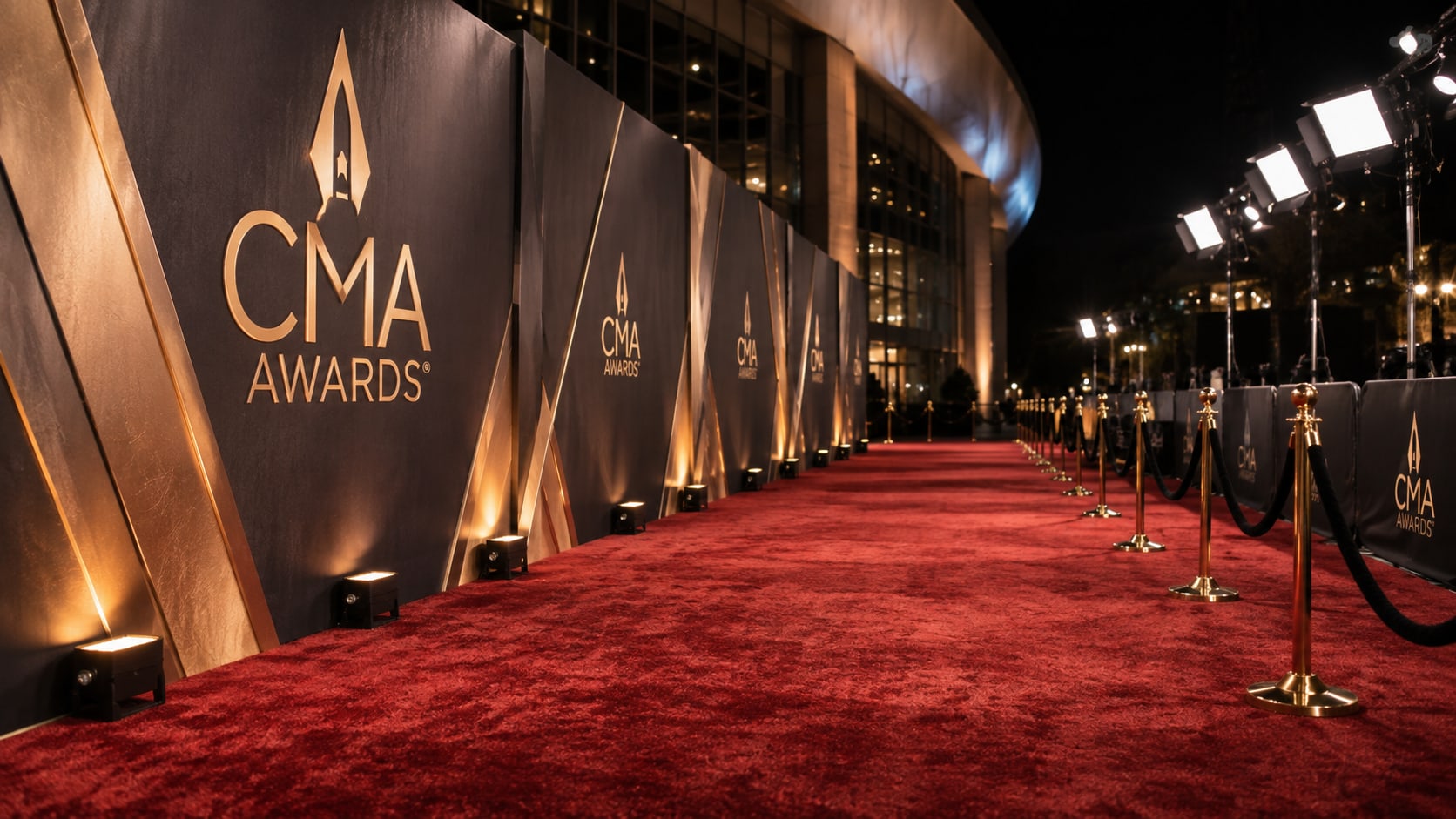
Imagine the CMA Awards red carpet as one of the most anticipated fashion moments of the year.
A country artist arrives in a custom Schiaparelli creation, built around her voice, her songs and the way she moves on stage.
Another wears an archival piece from Dior, pulled from the house's own history of reinterpreting the American West.
A major fashion house has spent months working with a Western leather artisan on a one-of-a-kind couture look that could not exist anywhere else.
Designers have been in the room with artists and stylists long before the ceremony, developing looks that say something about who these artists are.
It isn't Hollywood fashion transplanted to Nashville.
It's something entirely its own.
Now look at what actually happens.
Luxury fashion already uses Western culture as creative inspiration. So why are the people working inside that culture still struggling to get through the door?
The Runway Has Already Gone West.
This isn't a theory about trends. The record is specific.
Louis Vuitton built Pharrell Williams's Fall-Winter 2024 menswear collection around the American West. Turquoise studded suits and jackets, and it was tooled into belts, bolos, jewelry and bags. Through a collaboration led by Dee Jay Two Bears of the Standing Rock Sioux Tribe, Dakota and Lakota artists contributed flower motifs and parfleche designs to Speedy and Keepall bags, scarves and blankets.
That collaboration deserves credit. It is what it looks like when a house brings the people behind a culture into the work rather than simply sampling it. Louis Vuitton has also had a visible relationship with Beyoncé, who wore custom Louis Vuitton throughout her Cowboy Carter era.
Dior staged its Cruise 2018 collection in the hills of Calabasas, California, with Maria Grazia Chiuri drawing on the American West, cowgirl dressing and Georgia O'Keeffe. A year later, for Cruise 2019, the house flew a team of escaramuzas, the women riders of Mexican charrería, to the Great Stables of the Château de Chantilly to perform in custom Dior.
Ralph Lauren has done more than any American designer to turn ranch life into a luxury lifestyle. Double RL, launched in 1993, takes its name from his working ranch in Colorado. Western identity isn't a seasonal reference for that business. It's part of the foundation the whole brand is sold on.
Gucci's most recognizable house code, the Horsebit, comes from equestrian tack. The Horsebit loafer has carried that snaffle bit since 1953.
Not every house in this story has built a Western collection, and I won't pretend otherwise. But the pattern is clear enough. The visual language of the West, its leather, silver, turquoise, horses and open land, has real value at the top of the fashion industry.
I've Heard No From Them Myself.
I've experienced this disconnect firsthand.
While sourcing designer pieces for Cowgirl Magazine editorials, I approached Dior, Ralph Lauren, Rebecca Minkoff and Versace.
All four declined my requests.
I understand how pulls work. There are sample schedules, availability limits, editorial requirements and existing relationships that shape every decision. A decline is not a policy, and I'm not claiming it is.
But it raises a question I haven't been able to put down.
Why is Western culture valuable enough to inspire luxury collections, yet so difficult to access for the people creating Western editorial media?
"I've Only Ever Gotten No's."
I'm not the only one asking. I spoke with a professional stylist who works with a country music artist. The stylist asked not to be named, and I've kept every detail that could identify them or their client out of this piece.
The stylist described repeated declines when requesting designer garments. The houses and designers they named were Valentino, Ralph Lauren, Gucci, ALMEE, Miss Sohee, Gaurav Gupta and Elie Saab. These are firsthand reports of their own requests, made over time. They are not statements from the houses, and they were not all for the same event.
“I've only ever gotten no's.”
What stopped me was the context. The declines continued even while the stylist was preparing an artist for an awards appearance at one of country music's major ceremonies, where that artist had received multiple nominations.
Think about that.
An artist can earn significant recognition inside their own industry and still struggle to access the fashion houses that routinely dress other high-profile entertainment events.
What does a country artist have to accomplish before luxury fashion considers them commercially relevant?
Who Gets Access to High Fashion?
To be fair to the houses, designer loans are not charity. Samples are limited, and every placement is a bet. In my experience and in conversations with other stylists, the factors that tend to decide who gets those pieces look like this:
- Celebrity reach and expected media exposure
- Editorial coverage and publicity value
- Existing relationships between the stylist and the house
- Whether the artist fits the image the house wants to project
- Which artists the house already prefers to dress
- Simple sample availability
These are not published policies of any particular house. They are how the business of dressing people tends to work, and none of it is unreasonable on its own.
A second stylist I spoke with described restricted access as a long-standing reality of this market, and especially hard for artists who are not already very established. At the tier where houses like Saint Laurent and Gucci operate, access follows visibility. That stylist also described Roberto Cavalli as a house that has been genuinely receptive.
Here is the harder question.
Why should a country artist already need mainstream celebrity status before a fashion house sees the value in building a relationship?
There is a difference between recognizing cultural influence while it is emerging and waiting until an artist has become commercially unavoidable. The first is strategy. The second is following the crowd at the price of a front-row seat.
What It Looks Like When It Works.
On April 29, 2026, Ella Langley accepted the Powerhouse award at Billboard Women in Music in Los Angeles wearing Schiaparelli.
Schiaparelli announced the look itself. Langley wore Ready-To-Wear Spring Summer 2026, designed by Daniel Roseberry: a slim single-breasted jacket in white linen, wool and mohair with 3D satin volumes at the waist, a matching pencil skirt, a hand-braided calfskin clutch with the house's gold hand, and velvet mules on the signature S-shaped heel.
Her stylist, Stefani Colvin, later described opening the delivery to Country Living.
“When I received that Schiaparelli box, it was a dream come true. It had been flown in from Paris on Delta, and this man delivered it to me. I filmed myself unboxing everything because I had to check it all in. I was just overwhelmed by the craftsmanship.”
Langley isn't the first country artist to wear a major designer, and this isn't a story about firsts. It matters because it shows the whole relationship working: a house that announces the placement as its own, a stylist with real access, and an artist whose identity comes through in the clothes rather than being replaced by them.
It also shows how much the timing matters. Colvin told Country Living she started working with Langley more than three years ago, when Langley had roughly 100,000 followers. Langley loves Roberto Cavalli, both modern and vintage, along with traditional Western pieces. The visual identity was built long before "Choosin' Texas" spent 19 weeks at No. 1 on the Billboard Hot 100.
The point isn't that these relationships never happen.
The point is that they could be far more ambitious, more consistent and more commercially significant than they are.
The Commercial Case Fashion Is Leaving on the Table.
This is where I stop looking at it as a stylist and start looking at it as a brand strategist.
The audience is not small, and it is not slowing down.
- Country music reached 122.5 billion on-demand audio streams in the U.S. in 2025, up from 117.58 billion in 2024, according to Luminate.
- The 2025 CMA Awards drew 6.04 million viewers on ABC. That was a record low for the broadcast, and it was still six million people watching country artists walk a red carpet.
- Boot Barn, the largest Western retailer in the country, reported record net sales of $2.254 billion for fiscal 2026, up 17.9%, and ended the year with 539 stores.
Those numbers prove the audience exists and is spending. They don't prove that any single red-carpet loan will sell a handbag. I want to be precise about the difference.
What they point to is an opportunity that very few houses are treating deliberately:
- Exposure to an audience that treats Western identity as part of how it lives, not a trend it is trying on
- New customer relationships outside the coastal markets luxury already saturates
- Editorial storytelling that doesn't look like every other red carpet
- Cultural relevance that is earned rather than borrowed
- Collaborative products with artists and Western craftspeople
- Relationships with emerging artists before their mainstream breakthrough, when they cost the least and mean the most
Fashion houses already draw creative value from Western culture. Many are overlooking the chance to build direct commercial relationships with the artists and audiences who keep it alive.
Build Something Worth Watching.
Go back to that red carpet I opened with.
Picture a more intentional relationship between luxury fashion and country music, where:
- Major houses work directly with artists, not just around them
- Stylists have real access to runway collections and archives
- Designers create custom pieces that reflect each artist's identity
- Western craftspeople, leatherworkers, silversmiths and hatmakers, sit at the table on high-fashion collaborations
- Artists are creative partners, not temporary publicity opportunities
The goal isn't to make the CMA Awards look like the Oscars.
It's to build something with its own recognizable creative identity. An international fashion moment that grows out of country music's culture instead of standing apart from it.
Nobody else can build that moment. That's exactly what makes it valuable.
The Contradiction Is the Story.
I don't believe country music needs luxury fashion's approval.
And I don't believe every designer is obligated to dress every artist who asks.
But I do believe the fashion industry should look hard at the contradiction between celebrating Western culture as inspiration and overlooking the people who keep that culture commercially relevant.
The next meaningful luxury partnership may not come from waiting until another country artist becomes impossible to ignore. It may come from recognizing their influence before everyone else does.
Western culture has already earned its place on the runway.
Maybe it's time the fashion industry invested in the people behind it.
Sources & Notes
Declines described in this piece are firsthand accounts of individual requests, from me and from stylists I interviewed. They are not statements from the houses named, and they do not establish any house's policy or motive. Both stylists spoke on condition of anonymity.
- Schiaparelli, "Ella Langley Wears Schiaparelli to the 2026 Billboard Women in Music"
- Country Living, "The Stylist Behind Ella Langley's Signature Country Style Shares Her Best Vintage-Shopping Tip" (Aug. 28, 2026)
- Billboard, Ella Langley, 2026 Women in Music Powerhouse
- WWD, Ella Langley at the 2026 ACM Awards
- Luminate, 2025 Year-End Music Report (country on-demand audio streams, U.S.)
- Nielsen ratings for the 59th Annual CMA Awards, ABC, Nov. 19, 2025, as reported in the trade press
- Boot Barn Holdings, fiscal 2026 fourth-quarter and full-year results (fiscal year ended March 28, 2026)
- Louis Vuitton, Men's Fall-Winter 2024 show by Pharrell Williams, with Dakota and Lakota collaborations led by Dee Jay Two Bears
- Dior, Cruise 2018 (Calabasas, California) and Cruise 2019 (Great Stables, Domaine de Chantilly) shows by Maria Grazia Chiuri
- Ralph Lauren, Double RL (introduced 1993, named for the Laurens' Colorado ranch); Gucci, Horsebit loafer (introduced 1953)